-
-
-
 EUR
Heated Masturbators: A Guide to Materials, Heating and Care
2026-11-14
Heated male masturbator material safety depends on the complete product: the contact material, heating controls, water protection and charging instructions. TPE or silicone alone cannot tell you whether a heated model is suitable for use. Before buying, check its intended temperature settings, cleaning method and safety information. Treat missing details as questions for the seller, rather than filling the gaps yourself.
For a first-time buyer, a useful product description explains what gets warm, which parts can get wet and how to switch everything off. This guide is for adults aged 18 and over.
Is it safe to use heated masturbators?
 A heated masturbator should be assessed as an electrical product with a body-contact surface. A soft sleeve and a built-in heater each need suitable instructions. ISO 3533 addresses materials, design and user information for sex toys; its existence does not establish that a particular model has been tested or complies with it. [1]
Before ordering, look for a named material, clear heating controls, a power specification and cleaning directions. Ask whether heating can be turned off independently of vibration or movement. For a first purchase, we recommend prioritising straightforward controls and accessible care instructions over extra operating modes.
TPE material heat tolerance: why there is no single number
TPE means thermoplastic elastomer, a family of flexible materials. Heat performance depends on the particular compound and operating conditions. Material manufacturers publish different grades for different applications, so a temperature quoted for an industrial TPE cannot be transferred to a soft masturbator. [2]
Separate two questions when reading a listing: what temperature the material can withstand, and what operating conditions the finished product permits during body contact. A material's processing or heat-resistance figure does not answer the second question. Ask for the model's operating instructions rather than searching for a universal TPE limit.
Apply the same approach to silicone. Its name does not establish the heat limit of an assembled device containing a battery, seals and electronics. Do not boil, microwave or externally heat a powered product unless its own instructions explicitly permit the method. Follow the finished product's restrictions, including for cleaning.
 Which heating features should you check?
Read the heating description as a set of questions. Where is the warmth produced? Does the display show a selected setting or a measured temperature? How long should preheating take? Can heating remain active during use? A phrase such as “body-like warmth” leaves these practical points unanswered.
| Feature | What to confirm | Buying decision |
|---|---|---|
| Material | The material of the actual contact surface | Avoid relying on an outer-shell description |
| Heating settings | The intended settings and preheating procedure | Ask for instructions if only a maximum is advertised |
| Temperature control | Whether and how temperature is monitored | Do not infer a sensor from a display |
| Overheating protection | The documented response to abnormal heating | Do not assume it from an automatic timer |
| Water protection | Which parts the rating and washing instructions cover | Choose a cleaning method you can follow |
| Charging | Approved cable, power input and charging conditions | Check these before connecting power |
Ask separately about temperature regulation, session timers and overheating protection. A statement that a device switches off after a session does not, by itself, explain what happens during a heating fault. Request the model-specific explanation; do not assume every feature is included.
Follow the model's heating limits and stop if there is pain, irritation or discomfort. For unusual heat, a damaged cable or a swollen housing, discontinue use and charging and contact support. Do not open the housing or attempt to repair a battery yourself. [3]
Water resistance: which parts can be washed?
“Washable” needs an explanation of what can be washed. It might describe a removable sleeve rather than the electrical body. Keep charging ports and powered components away from water unless the instructions explicitly permit exposure. Check the individual model's directions before choosing a washing method. [5]
An IP rating describes an enclosure's protection against ingress. For water, IPX4 relates to splashing, while IPX7 relates to temporary immersion under defined test conditions. These are different exposure categories. Neither label replaces the manufacturer's directions for washing or permitted use. [4]
Ask whether the stated rating covers the whole assembled product, whether a port cover must be closed and whether immersion is actually allowed. Do not treat a rating as permission to use soap, hot water or a shower in ways the instructions do not describe.
For example, a removable washable liner with a wipe-clean motor housing requires two cleaning methods. If the listing simply says “waterproof” without identifying the protected parts or cleaning procedure, ask for clarification before buying. Choose a model whose instructions match the way you plan to clean it.
An electric masturbator care guide
Check the cleaning instructions before first use and clean after each use. SH:24, a sexual health service working with the NHS, advises checking both the material and the presence of batteries when choosing a cleaning method. [5]
1. Switch off and disconnect
Turn off heating and other functions, disconnect the charging cable and follow any cooling directions. Remove only components intended to come apart for washing. If the manual does not explain removal, ask the seller rather than pulling the sleeve away from its housing.
2. Wash only the permitted parts
Use the water temperature and cleaner specified for the model. Where mild, unscented soap and water are permitted, clean accessible surfaces and rinse away the soap. For a housing that cannot be rinsed, follow its wipe-clean instructions. Do not submerge it to reach a difficult area. [5]
3. Dry before storage or charging
Use a clean, lint-free cloth on accessible surfaces and allow remaining moisture to dry. Check the inner channel, removable parts and charging area. Store the product only when dry; keep the battery terminals free of moisture. Do not turn on heating to dry the sleeve unless the manual provides a dedicated drying procedure. [3]
4. Store and inspect
Keep the cooled, dry product in a clean bag or box away from sunlight and heat. Before its next use, inspect the contact surface, seams, cable and housing. Stop using a damaged product and ask about replacement parts or service instead of attempting repairs. Follow the supplied storage directions.
Lubricant and charging checks
Use a lubricant approved for the specific material. Water-based lubricant is compatible with the Dr.YUU range described here, subject to the individual product instructions. Check before using silicone-based or oil-based alternatives; silicone lubricant can damage some silicone toys. Heating does not remove the need to confirm compatibility. [6]
For rechargeable models, use the supplied or manufacturer-approved charging equipment and specified power input. Charge where you can monitor the device, on a hard surface away from bedding. Unplug when charging is complete. The National Fire Chiefs Council recommends following the manufacturer's instructions and avoiding damaged equipment. [7]
Check whether the model permits operation while connected to power. Until that is explicitly confirmed, keep charging separate from use. A cable fitting the connector is not enough information to establish compatibility.
Make the first-use routine manageable
Read the controls before switching the heater on. Find the power button, heating control and stop function, then check the sequence in the manual. If there are several modes, learn them separately. You should be able to stop heating promptly without searching through a menu during use.
Think about your space, too. If you share a bathroom, a removable liner may make cleaning easier, provided the model is designed for removal. Plan where the parts will dry and where you can charge the device while keeping it visible. Put it into discreet storage only after charging is finished and all parts are dry and cool.
When comparing two models, write down their cleaning steps alongside their features. A design with fewer modes may suit you better if its care routine is clearer. Before paying, check that the seller can supply replacement cables, instructions and support for the exact model.
What does “meets EU safety standards” mean?
A useful compliance claim identifies the model and the applicable requirements. Where CE marking applies, it represents the manufacturer's declaration that the product meets relevant EU rules. It does not mean an EU authority has individually approved the product. Supporting documentation matters. [8]
If a seller mentions a tested heating element, ask whether the evidence also covers the finished device. A component report alone does not describe every material, seal or control in the assembled product. Request the applicable EU Declaration of Conformity and clarification of any specific testing claim. [8]
Comparing Dr.YUU models
Dr.YUU offers soft masturbators in TPE and silicone designs, including models with built-in heating. Check each listing for its exact combination of material and functions. The EU store serves adults aged 18 and over and offers discreet EU shipping.
Browse our heated masturbators to compare available warming designs. If you prefer a body-shaped model, explore the butt masturbator collection and check which functions each model includes. For general cleaning and storage advice, read our masturbator care guide. Always follow the instructions for your specific model, and contact Dr.YUU support if a detail is missing.
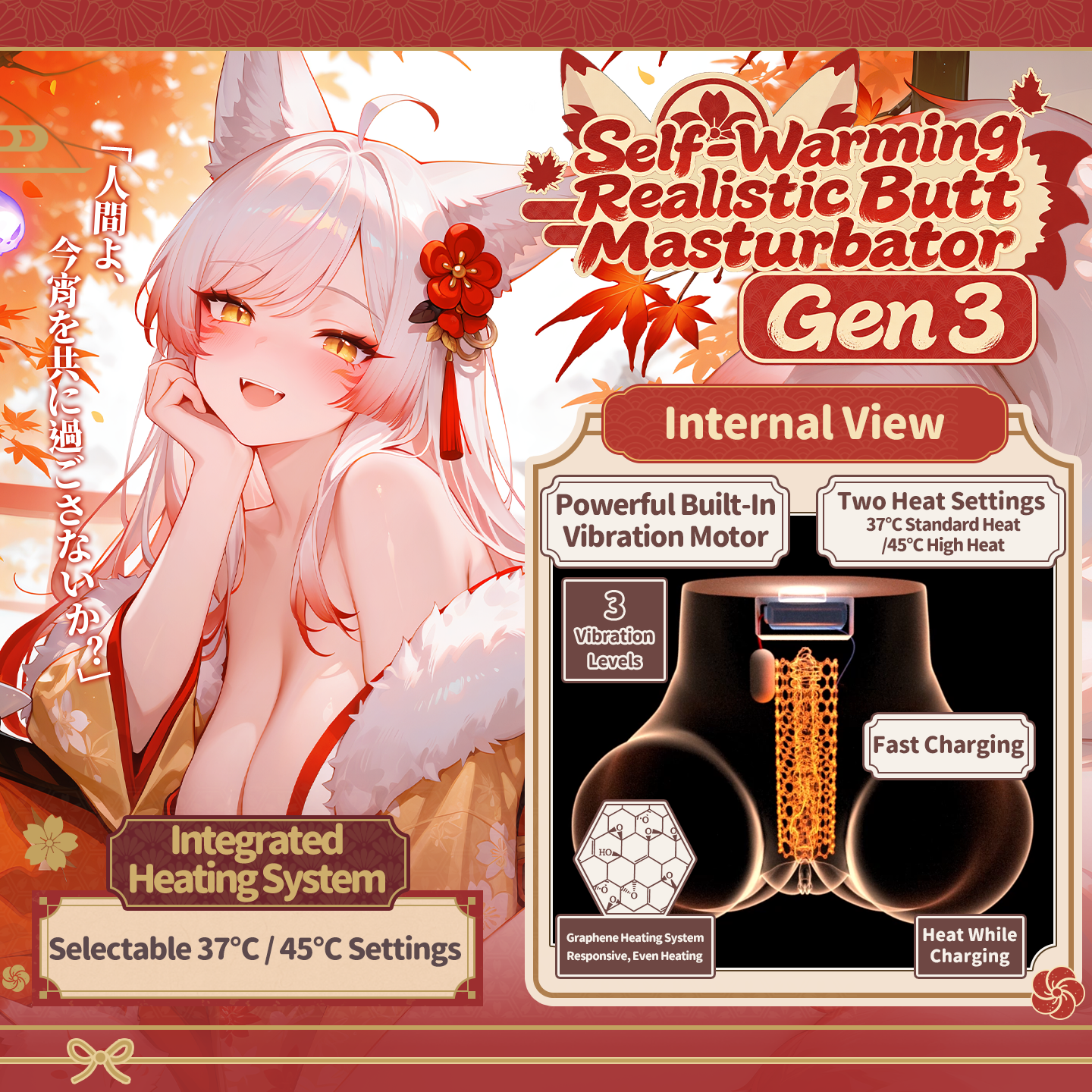
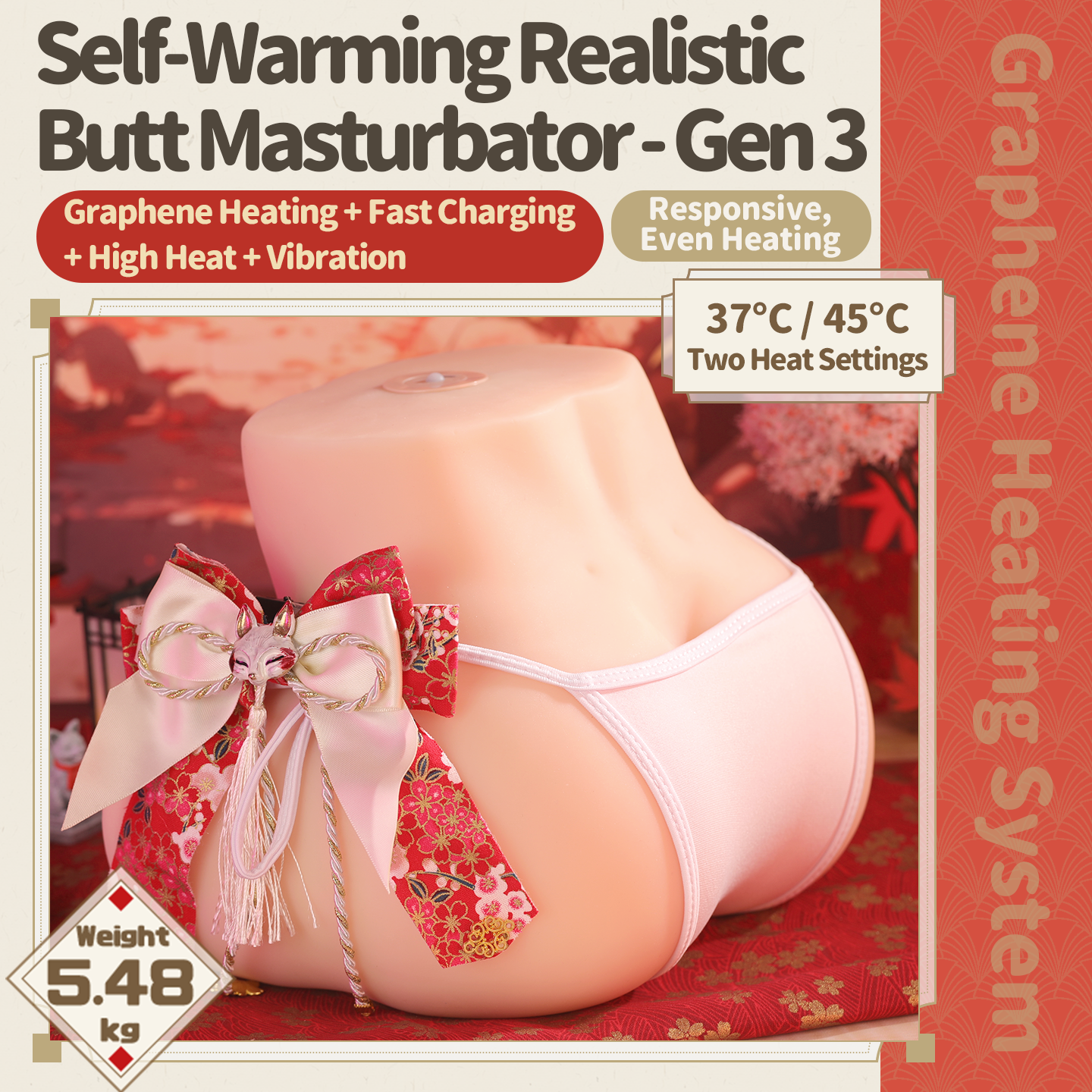
For two different heated formats, compare the YUKI Gen 2 oral masturbator with the Gen 3 Heated Butt Masturbator. Check each product page for its heating controls, dimensions and care instructions before choosing.
Frequently asked questions
What temperature is safe for every heated masturbator?
There is no universal setting established by a TPE or silicone label. Use the model's intended settings and operating instructions; do not substitute an industrial material heat-resistance figure.
Can I rinse the whole product if the sleeve is washable?
Only if the instructions permit it. A washable sleeve may be separate from a housing that must stay dry. Confirm the permitted method for each part.
Does automatic shut-off prove overheating protection?
No. Ask what triggers shut-off and whether the manual separately describes a response to abnormal heating. A session timer alone leaves that question unanswered.
Can I boil a silicone heated masturbator?
Do not boil an assembled powered device unless its manufacturer explicitly permits it. The cleaning limits apply to the complete product, not just the silicone surface.
What should I do if the device becomes unusually hot?
Stop using and charging it. Contact the seller for assessment; seek medical advice for pain, suspected burns or persistent irritation. Do not continue by repeatedly restarting the device.