-
-
-
 EUR
Manual vs Automatic Male Masturbators: What’s the Difference?
2026-11-21
A manual male masturbator relies on the user to create and control the movement. An electric model uses power for a stated function, which might be vibration, rotation or a back-and-forth mechanism. What the motor moves depends on the model. Heating is a separate feature, so it does not establish whether a product provides powered movement.
When comparing a manual vs automatic male masturbator, start with the action you want to control yourself and any function you want the product to provide. For an adult first-time buyer, the useful question is specific: does this model vibrate, turn an internal component, or drive a sleeve backwards and forwards?
Manual vs electric: who controls the movement?
With a manual design, you supply the movement and change its pace directly. With an electric design, you select the available powered function through its controls. You may still need to hold or position the product. The word “automatic” does not explain every part of that arrangement.
| What to compare | Manual model | Electric or automatic model |
|---|---|---|
| Who creates the movement? | The user supplies and controls it. | A powered mechanism provides the listed action; positioning may still be the user's responsibility. |
| How is the pace changed? | By changing your own movement. | Through the stated speeds, modes or controls for the powered function. |
| Is power needed? | No power is needed for the user-driven movement. | Power is needed for the electrical functions; check the specified supply or charging method. |
| What should the listing explain? | Manual operation and the product's intended handling. | The action, the part it acts on, the controls and the power requirements. |
This is a comparison of control, rather than a judgement that one category is easier or better. Direct control may be the reason to choose a manual product. A particular motor-driven action may be the reason to choose an electric one. Count only the functions you want to use, rather than treating a longer feature list as an advantage by itself.
Vibration, rotation, thrusting and heating mean different things
An electric male masturbator may combine functions, but each needs its own description. Read each action word together with the component it refers to. For rotation, that means identifying the tongue, sleeve or other turning part. For a back-and-forth action, it means finding the mechanism shown travelling along an axis.
Vibration: an added powered function
Vibration means a motor produces repeated oscillation. A listing may describe a built-in vibrating module, selectable levels or vibration patterns. Those details concern the vibration function. They do not, by themselves, describe a sleeve travelling backwards and forwards.
If you want to keep control of the overall rhythm while adding vibration, look for how that function is switched on and adjusted. A vibration pattern is not automatically a movement speed. Where a product has several functions, check whether the controls let you select the combination you want.
Rotation: identify the component that turns
Rotation describes a turning action in a specified part. That part could be an internal tongue or a sleeve mechanism. The description should make its location clear; neither example means that the complete housing spins.
For instance, the Gen 2 Rotating Tongue model explicitly lists 360° tongue movement and a built-in vibrating bullet. The tongue is the rotating component. Those statements establish local rotation and vibration; they do not establish powered back-and-forth travel of the whole product. This is the rotating-tongue Gen 2, not the YUKI Gen 2 heated model.
Thrusting or reciprocating action: a back-and-forth mechanism
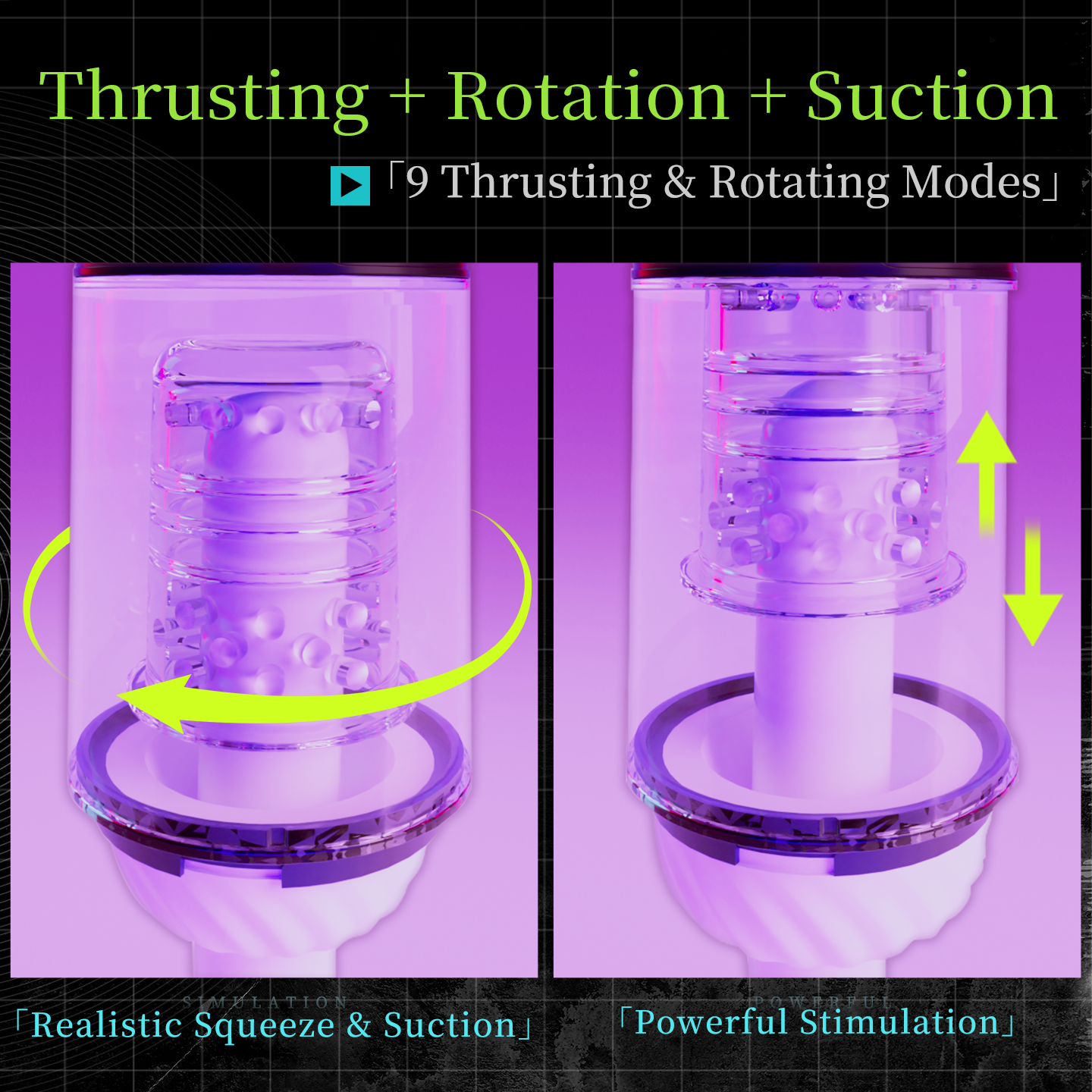
Reciprocating movement travels backwards and forwards. In a product listing, look for wording such as “thrusting” and a diagram showing which sleeve or mechanism moves. A mode count alone does not identify that action: several vibration patterns are still vibration patterns.
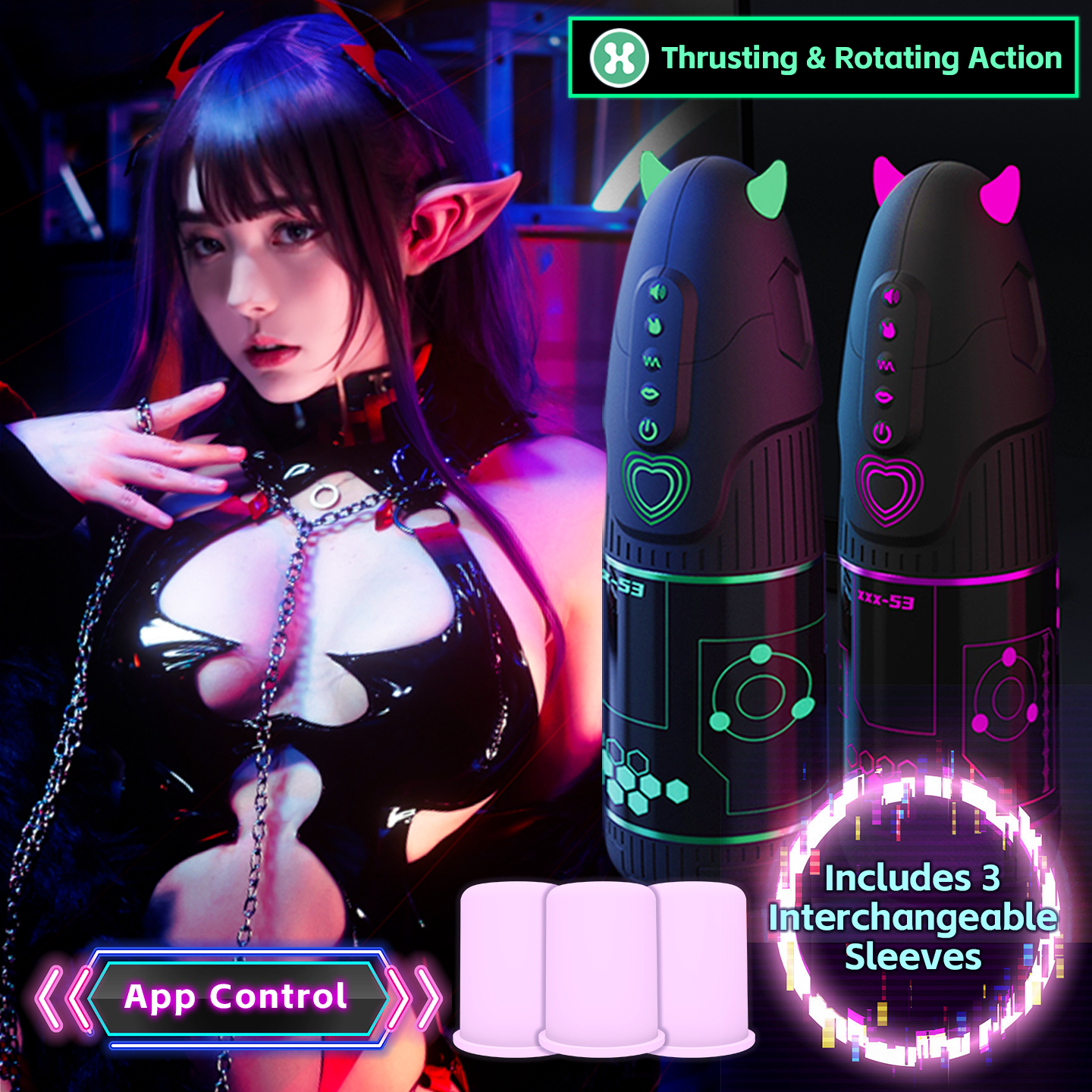
The linked Little Devil automatic masturbator lists thrusting and rotation. Its movement illustration shows the internal sleeve mechanism turning and travelling along its axis. This provides a different example from Gen 2's rotating tongue. It describes movement within the device, rather than a claim that the complete unit moves backwards and forwards on its own.
For an automatic male masturbator, keep the mechanism and the way you support the product separate. A powered stroke does not establish hands-free operation. Check the handling instructions instead of inferring a mounting arrangement from the action name.
Heating: a separate temperature feature
Heating changes temperature; it does not identify a movement mechanism. A listing needs to state vibration, rotation or thrusting separately if those functions are included. Equally, a product with powered movement should not be assumed to include heating.
For this comparison, heating matters only as a separate specification to recognise. If it is part of your shortlist, check that it belongs to the exact version you are viewing. Do not use a warming feature to answer the question “does this product move on its own?”
A beginner's checklist: match the listing to the control you want
Start with your preferred division of control. Then use the specification fields below to see whether the product matches it. You do not need to choose a model with every possible function.
If you want to set the rhythm yourself
Look for a clear statement of manual operation and the intended handling. Check whether the product is an unpowered design or a powered model whose listed function adds something to user-controlled movement. “Electric” alone will not settle that distinction.
- Find the operating description, rather than relying on the category label.
- Identify whether any powered feature changes the movement you intend to control.
- Read the handling instructions so you understand how the product is supported and positioned.
If you want a motor to provide a particular action
Name the action before comparing models. If you want back-and-forth sleeve movement, search the specifications for an explicit thrusting or reciprocating mechanism. If you want local rotation, identify the tongue, sleeve or other component described as rotating.
- Match the action description to a labelled diagram or demonstration of that model.
- Check the controls for that function, including the listed speed or mode options.
- Confirm the power requirements and the handling arrangements in the supplied instructions.
If the page only says “multiple modes”, ask which mechanism those modes control. A useful question is: “Which component moves, and is the movement rotational or back and forth?” That is easier to answer precisely than asking whether a product is fully automatic.
If you only want to add vibration
Check for a vibration module and its controls. Look for levels or patterns described specifically as vibration, then confirm how they are selected. If you want vibration without an accompanying movement function, ask whether that combination is available on the exact model.
This keeps your comparison focused. You can assess the feature you want without treating a thrusting mechanism, app interface or heating option as a requirement. Do not assume that separate feature names mean independent controls; the instructions need to explain the available combinations.
Keep the full product name and selected version beside your notes. A shared generation number or similar photograph is not enough to transfer a function from one listing to another.
For broader questions beyond movement and control, use our practical male masturbator buying guide. If you have decided that a powered function is what you want, browse the electric masturbator collection and compare the named actions on each product page.
Frequently asked questions
Does an electric masturbator move on its own?
It depends on the mechanism. A motor may provide vibration, turn a local component or drive a back-and-forth action. Check which part moves and how; the presence of a motor does not establish whole-device movement.
Are “automatic” and “electric” the same thing?
Do not rely on the labels alone. Electric identifies a powered function, while an automatic claim needs a specific explanation of the action provided. Use the operating description to confirm what the model actually does.
Does a rotating tongue mean the whole product rotates?
No. A rotating tongue describes movement of that internal component. Check separate specifications for any sleeve movement or other powered action.
Does a heated model automatically provide thrusting?
No. Heating and thrusting are separate features. Look for an explicit movement specification rather than inferring it from temperature controls.
Is a manual or automatic model better for a beginner?
Choose according to the control you want. Start with manual operation if you want to supply the movement yourself, or a named powered function if that is your priority. Confirm the action, moving component and controls before ordering.